Podcast: Play in new window | Download
A Quick Note to Listeners:
Before this week’s interview, Will Parker and Jen Schwanke take some time to answer a listener question. This week’s question is:
I’m wanting to intentionally develop leaders on my team. Ideas or suggestions?
Listen in to hear their repsonse!
Meet Dr. Darin Thompson:
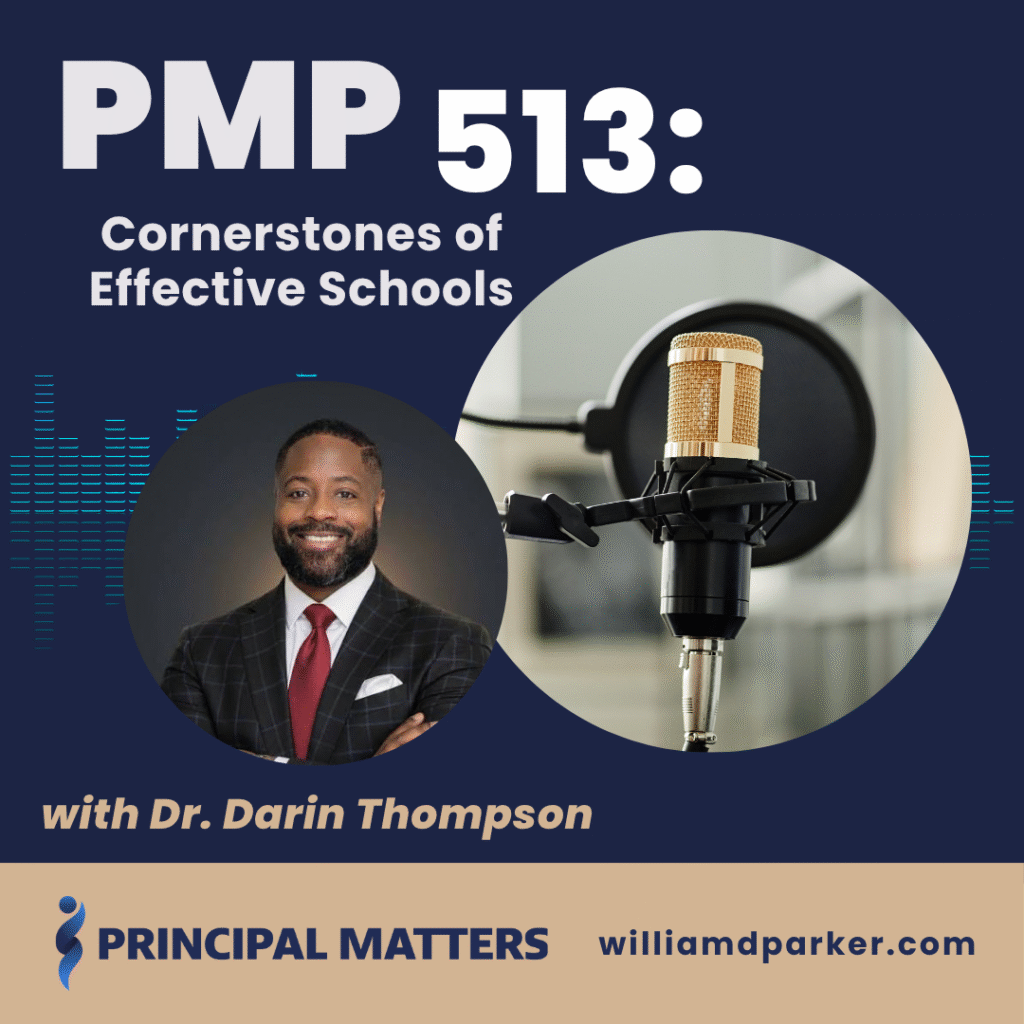
Darin A. Thompson, PhD, is a veteran K–12 leader from Fairfax, Virginia, with nearly 20 years of experience and the founder of Pivotal Leaders Group. A two-time Outstanding Principal of the Year semi-finalist within his region, Dr. Thompson has led transformative school improvement efforts across multiple school divisions, resulting in double-digit gains in student outcomes and significant reductions in achievement gaps for historically underserved populations. A regular presenter at conferences such as NAESP/NASSP’s United Conference, Making Schools Work, and the Virginia Alliance of Black School Educators, Dr. Thompson has contributed to Education Week, the Journal of Urban Learning, Teaching, and Research, and other publications. He is the author of The Four Cornerstones of Effective Schools, published by Solution Tree, and a proud member of Kappa Alpha Psi Fraternity, Inc.
Effective Schools & the Four Cornerstones:
Dr. Thompson’s framework centers on the belief that effective schools are built through intentional systems, not isolated initiatives. In The Four Cornerstones of Effective Schools, he outlines how culture, collaboration, and aligned structures work together to support improvement. Rather than chasing new programs, leaders are encouraged to focus on building systems that consistently reinforce high-quality teaching and learning.
Dr. Thompson’s Educational Journey:
Dr. Thompson shares that his path into education was anything but traditional. Initially interested in careers in law and financial planning, he discovered his passion for teaching and was later encouraged by a principal to step into leadership. That encouragement set him on a path that would eventually lead to the principalship and beyond, shaping his belief that leadership development often begins with someone recognizing potential in others.
The Pivotal Leader Mindset:
A key takeaway from the conversation is the importance of developing a “pivotal leader mindset.” Dr. Thompson explains that school improvement begins with how leaders think. Growth-oriented beliefs, combined with a willingness to examine one’s own assumptions, allow leaders to better navigate complex challenges. Without this mindset, even the best strategies can fall short.
Limiting Beliefs in Leadership:
As the discussion continues, Dr. Thompson highlights how limiting beliefs can quietly undermine progress. Under pressure, leaders may begin to question their own effectiveness or doubt the capabilities of their staff. He emphasizes the importance of confronting these beliefs with evidence and shifting the focus toward building skills and capacity. When leaders change how they think, they change how they lead.
School Culture & Staff Support:
The conversation reinforces that strong culture is foundational to any improvement effort. Dr. Thompson describes common barriers such as complacency, isolation, and command-and-control leadership, all of which can limit progress. He stresses that support must come before accountability—teachers need clarity, resources, and encouragement before they can be expected to perform at high levels.
Diagnosing the Cultural Landscape:
Before implementing change, Dr. Thompson encourages leaders to pause and assess their current environment. He introduces three essential elements for a culture of support: clarity, trust, and readiness. Clarity ensures everyone understands the vision, trust builds confidence in leadership, and readiness equips staff with the skills needed to succeed. Skipping this diagnostic step often leads to frustration and failed initiatives.
Building Instructional Capacity:
Improving instruction requires more than one-time professional development. Dr. Thompson shares strategies for building capacity over time, including job-embedded learning, teacher-led sessions, and consistent feedback. He describes practical approaches like teacher-led “egg camps,” where educators share effective practices based on real classroom data, creating relevance and ownership in the learning process.
PLCs & Collaboration:
Professional Learning Communities play a critical role in sustaining improvement. Dr. Thompson explains that effective PLCs go beyond logistics and focus on meaningful collaboration around instruction and student outcomes. While resistance is common at first, establishing clear expectations and purpose helps shift teams toward deeper engagement and shared responsibility.
Systems for Sustainable Improvement:
Throughout the conversation, Dr. Thompson returns to the importance of systems. Strong systems act as guardrails, helping leaders stay focused on priorities and avoid reactive decision-making. By aligning systems with the school’s vision, leaders create consistency and momentum, allowing improvement efforts to take root and grow over time.
Leadership & Well-Being:
The episode concludes with an encouraging message for leaders. Dr. Thompson reminds listeners that meaningful school improvement is possible without burnout. By focusing on systems, maintaining clarity, and prioritizing the right work, leaders can create lasting impact while also sustaining their own well-being. His message is both practical and hopeful—offering a clear path forward for those committed to leading effective schools.
Staying Connected:
You can stay connected with Dr. Thompson’s work via the following channels:
- LinkedIn: https://www.linkedin.com/in/drdarinthompson/
- Solution Tree contact: https://www.solutiontree.com/darin-a-thompson.html
- Visit Darin’s website, www.DrDarinThompson.com
- Follow Darin on Youtube @drdarinthompson
- Follow Darin on Instagram @drdarinthompson
Find Dr. Thompson’s new book, The Four Cornerstones of Effective Schools, here: https://www.solutiontree.com/four-cornerstones-of-effective-schools.html